
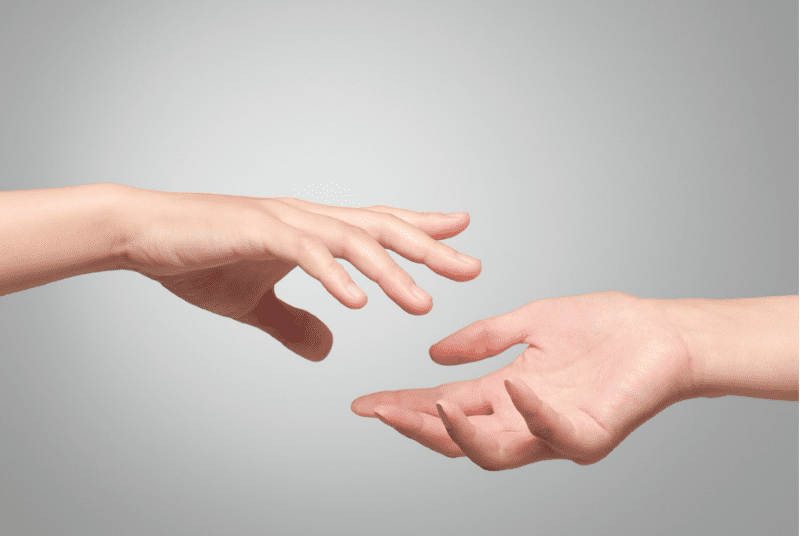
Love and Receiving – To be Experienced Hand-in-Hand
Over the past weeks, our community was reminded—forcefully and tenderly—that none of us are as separate or insignificant as we sometimes believe. Even in a small corner of the world, life moves through us collectively. What touches one, touches all.
The fires came early this year. Dry land, relentless wind, and high temperatures turned ordinary days into days of threat and uncertainty. Smoke lingered. Ash settled. For some, fear became constant. And for a few, loss arrived with devastating finality.
When disaster strikes, something ancient wakes up in us.
Suddenly, differences soften. Old grievances lose their grip. Hands open. Hearts lean forward. People give what they can—prayer, food, time, money, comfort—without measuring worth or waiting for permission. Love moves freely, because in moments like these, we remember who we are.
We become community again.
And then, almost imperceptibly, the crisis passes.
Life resumes its pace. Defences return. Hearts close quietly. Love is folded away for “another time,” for “when it’s needed again.”
This is the moment that has stayed with me.
What if the fire was not only something to survive, but something to learn from?
What if we allowed ourselves to receive the lesson while it is still warm in our bodies?
Some members of our community paid a very high price. They lost homes, possessions, safety, certainty. This is not something to spiritualise or diminish. Their pain deserves reverence, not explanation.
And yet, alongside that pain, something else emerged: an opportunity for the rest of us to remember love—not as an idea, but as a lived experience. Many of us opened to people we had never met. We felt their fear. We carried their loss. We gave without calculating, and we received without conditions.
For a moment, love flowed.
The invitation now is simple, and not easy:
Can we stay open?
Can we allow compassion, kindness, forgiveness, and care to remain present—not only in crisis, but in ordinary days? Can we honour what was revealed by living it, rather than waiting for the next disaster to remind us?
Why don’t we?
As I sat with this question, two answers kept returning.
We fear our love.
And we don’t know how to receive.
Many of us learned early that love is not always safe. That when we open our hearts, our love can be taken, twisted, or used as a point of control. We learned that openness can invite manipulation, abuse, or expectation, and that giving freely can come at a personal cost.
So we did what humans instinctively do to survive — we adapted. We learned to guard our love. We learned to measure it, ration it, and keep it behind carefully built walls. Not because we are cold, but because we are wise to pain.
When crisis strikes, something remarkable happens. The urgency strips away our defences. There is no time for calculation or self-protection. Love moves instinctively. We give without strategy, without waiting to see if it is safe. And for a moment, we remember how natural love is when fear is silent.
But when the danger passes, memory returns.
The memories that say:
My love gets used.
My love becomes a weakness.
My love brings hurt.
So we close again — not because we lack love, but because we fear what happens when it is met without care.
And this is where the flow so often comes to a halt.
We hesitate to receive, not because we do not want what is offered, but because receiving feels like entering a contract. If I receive your love, your help, your kindness, then I must open myself to you. And opening has not always been safe.
For many of us, receiving has carried a hidden cost. It has come with expectations, strings attached, unspoken demands, or the slow erosion of boundaries. So we learned that the safest exchange is a transactional one. If I pay, I owe nothing. If I work for it, I remain protected. If nothing is “free,” then nothing can be used against me.
This belief is reinforced by what we were taught: you must earn what you want. Nothing comes without effort. The subconscious mind does not separate love from money, or kindness from labour. Work for what you want becomes a rule that applies everywhere.
So when something is offered freely, the body tightens. Suspicion arises. Gratitude feels dangerous. Receiving activates vigilance rather than ease.
Not because we are ungrateful —
but because we are trying to stay safe.
I learned this lesson quietly one day, when someone offered me a gift and I insisted on paying. After my refusal was gently met again and again, they said words that changed me:
“Never deny me the joy of giving.”
In that moment, I saw how often I closed the door to love—not only for myself, but for others. How my refusal told them their gift had to be earned. How my belief blocked joy, connection, and abundance from flowing naturally.
Receiving is not weakness.
It is trust.
It is grace.
It is love recognising itself.
If we truly are love at our core—and we are—then love is infinite. It does not diminish when it is rejected. It does not need permission to exist. Those who struggle to receive are not rejecting love; they are simply afraid of it.
So perhaps the greatest way to honour those who suffered, and those who gave, is this:
To live with open hands and an open heart.
To give freely without fear.
To receive graciously without guilt.
To believe we are worthy of all the good that wishes to find us.
Because when we block receiving, we block the whole cycle—and with it, peace, joy, and community.
May we walk forward together, not waiting for the next crisis to remember who we are.
May we stay open.
May we live in gratitude.
May love move through us—freely given, graciously received.
I wish you love.
Give it freely.
Receive it gently.